How to Tell if Your Sewer Line Is Clogged or Damaged
Multiple slow drains, gurgling toilets, and sewage odors mean your main line is in trouble. Here's how Fountain Valley homeowners tell a clog from a break.
You can tell your sewer line is clogged or damaged by watching for multiple slow drains, gurgling toilets, sewage odors, and water backing up in the lowest fixture of your home. If only one drain is slow, the clog is usually local; if every drain in the house is sluggish or you see sewage in the tub, the problem is in the main line. A damaged line adds another layer: you may notice sinkholes, extra-green patches in the yard, or repeated clogs in the same spot. This guide covers the exact signs we look for, how we separate a clog from a break, and what repair typically costs in Fountain Valley in 2026.
The Difference Between a Clog and Damage
A sewer line clog is a blockage inside an otherwise intact pipe, usually caused by grease, roots, or flushed debris. Sewer line damage is a physical failure of the pipe itself - a crack, collapse, offset joint, or root intrusion that has deformed the line. The symptoms overlap, which is why homeowners often misdiagnose one as the other.
Here's the practical difference: a clog responds to clearing. A damaged line keeps clogging because the pipe's shape or surface is compromised. If we clear your main line and you're calling us again three months later for the same backup, that's a strong signal of damage, not a simple clog. We see this pattern constantly in Fountain Valley's older tracts, where original cast iron and Orangeburg pipes are now 50 to 65 years old.
If you're dealing with a stubborn backup right now, our team handles Clogged Drain Cleaning Fountain Valley CA with camera inspection included, so we can tell you which problem you actually have before quoting a repair.
Signs of a Clogged Sewer Line in Fountain Valley
Signs of a clogged sewer line in Fountain Valley usually show up first in the fixtures closest to the main cleanout. The clog builds gradually, so the early warnings are easy to dismiss.
Watch for these:
- Multiple slow drains. One slow sink is a local trap issue. A slow sink, slow shower, and slow laundry drain at the same time points to the main line.
- Gurgling toilets. When you run the washing machine or take a shower, the toilet gurgles because air is being pulled through the trap as water backs up behind the clog.
- Water in the lowest fixture. In most Fountain Valley homes, that's a ground-floor shower or a floor drain in the garage. Sewage there means the line is blocked past that point.
- Foul odors. A sulfur or rotten-egg smell near floor drains or the cleanout means waste is sitting in the line instead of flowing.
- Repeated plunging. If you're plunging the same toilet weekly, the blockage isn't in the toilet - it's downstream.
Grease is the number-one culprit in kitchen-adjacent lines. Cooking oil cools as it travels, coats the pipe wall, and traps paper and food particles. Over 12 to 24 months, that coating can close a 4-inch pipe down to almost nothing. Root intrusion from ficus, sycamore, and liquidambar trees is the second most common cause we find in Fountain Valley, especially on properties built before 1980.
Signs of Sewer Line Damage in Fountain Valley, California
Signs of sewer line damage in Fountain Valley, California, tend to be structural: ground movement, pipe age, and root pressure rather than simple buildup. Fountain Valley sits on clay-heavy soil that shifts with our wet winters and dry summers, and that movement stresses older pipes.
Look for these indicators:
- Sinkholes or soft spots in the yard. A sunken patch along the sewer run means soil is washing into a cracked or collapsed pipe.
- Unusually green grass in one strip. Sewage is a fertilizer. A bright green line across an otherwise dry lawn in October is a classic sign of a leaking sewer.
- Repeated clogs in the same location. If the camera shows the same joint or offset every time, the pipe is damaged, not just dirty.
- Foundation cracks or shifting. In severe cases, a leaking sewer line saturates soil under the slab and causes movement.
- Sewage smell inside the house. A broken line under the slab lets gas into the living space - this is a health issue, not just a plumbing annoyance.
Pipe material matters here. Orangeburg (a tar-paper pipe used in the 1950s and 60s) deforms and collapses. Cast iron rusts from the inside out and eventually scales shut. Clay tile cracks at the joints. If your Fountain Valley home was built before 1975, there's a good chance you have one of these materials underground.
When the camera confirms a break, we move to Sewer Repair Service Fountain Valley CA - either a spot repair, pipe bursting, or a full line replacement depending on how much of the run is compromised.
How We Diagnose the Problem
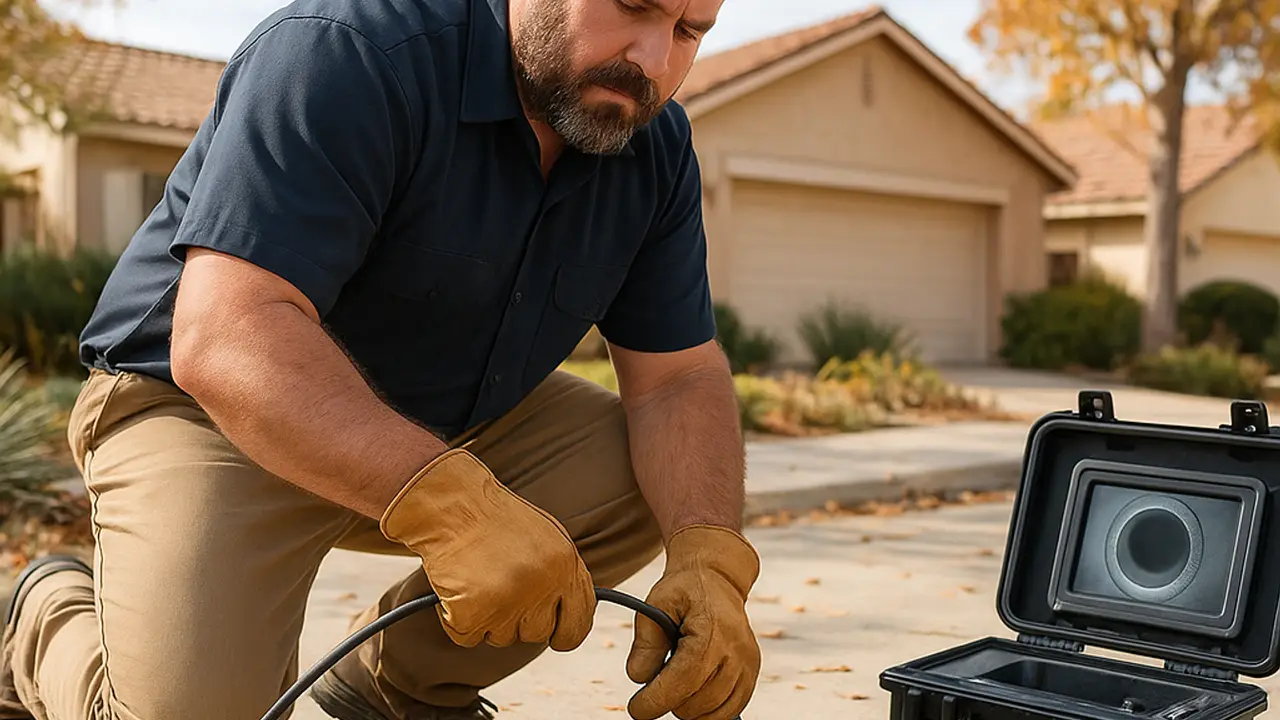
We diagnose a sewer line problem by running a camera through the main cleanout and mapping exactly where the blockage or break sits. No guessing, no digging until we know what we're dealing with.
The process takes about 45 to 90 minutes:
- Locate the cleanout. Most Fountain Valley homes have one near the front property line or in the front yard.
- Camera inspection. A fiber-optic camera travels the full run. We record the footage and note the distance to any defect.
- Locate the line above ground. A sonde transmitter lets us mark the exact path and depth of the pipe so we don't dig up the wrong spot.
- Recommend the fix. If it's a clog, hydro jetting clears it. If it's damage, we quote the repair before we touch a shovel.
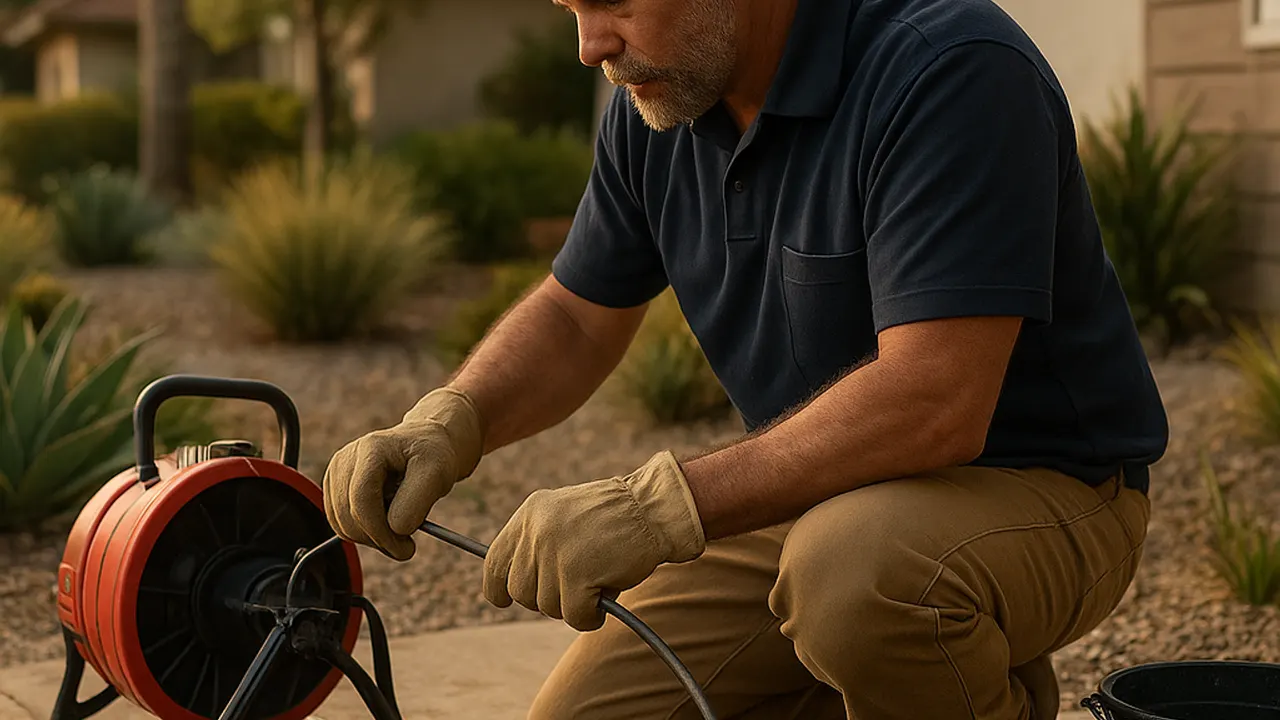
For heavy grease and scale, Hydro Jetting Services Fountain Valley CA scours the pipe wall back to bare material at 3,000 to 4,000 PSI. That's the difference between clearing a clog and actually fixing the flow problem.
If the camera shows a break under the slab or a collapsed section, we bring in trenchless options where the soil and access allow. Most residential sewer replacements in Fountain Valley in 2026 run between $4,500 and $12,000 depending on length, depth, and whether we can pull a new liner through the old pipe or have to excavate.
What to Watch Out For
The biggest mistake we see is treating a main-line problem with a plunger and a bottle of drain cleaner. Chemical drain cleaners generate heat, and in an already-weakened pipe, that heat can turn a crack into a full break.
Other things to avoid:
- Flushing "flushable" wipes. They don't break down. They snag on roots and grease and form the core of most blockages we pull out.
- Pouring grease down the drain. Even with hot water, it cools and hardens within 10 to 15 feet of the sink.
- Ignoring a single backup. One backup is a warning. Two is a pattern. Three means you have damage.
- Letting a slow drain sit for months. A partial clog becomes a full blockage, usually on a holiday weekend when you need the house most.
- Hiring a rooter service that doesn't camera the line. If they clear it and leave without looking, you'll pay again in 60 to 90 days.
We also see homeowners in the Emergency Plumber in Fountain Valley service area try to snake a line themselves and push the clog deeper or damage the pipe wall. A hand snake can't clear a root mass, and it can scratch cast iron enough to start a rust cycle.
When to Call a Professional
Call a professional the moment sewage backs up into a fixture, you smell gas inside the house, or you have standing water in the yard along the sewer run. Those three symptoms mean the problem is already past the DIY stage.
We handle sewer calls across Fountain Valley daily. Our technicians arrive with a camera, a jetter, and the locator on the truck, so we can diagnose and clear most main-line clogs in a single visit. If the line is damaged, we give you the repair options and pricing before any work starts.
For homes in the Emergency Plumber in Mile Square neighborhood, where a lot of 1960s tracts still have original cast iron, we recommend a camera inspection every two to three years once the pipe passes the 40-year mark. It's a $250 to $450 inspection that can save you a $10,000 emergency replacement.
If you're not sure whether you have a clog or damage, that inspection is the fastest way to know. We'd rather tell you the line is fine than sell you a repair you don't need.
Frequently Asked Questions
How do I know if my sewer line is clogged in Fountain Valley?
Multiple slow drains, gurgling toilets, and sewage backing into the lowest fixture mean your main line is clogged. If only one drain is slow, the clog is local. A camera inspection through the cleanout confirms it in under 90 minutes.
What are signs of a damaged sewer line in Fountain Valley CA?
Sinkholes, extra-green grass strips, repeated clogs in the same spot, and sewage odors inside the house point to damage. Homes built before 1975 with cast iron, clay, or Orangeburg pipe are the highest risk. A camera inspection shows cracks, offsets, and root intrusion directly.
Who do I call for sewer line repair in Fountain Valley?
Call a licensed plumbing contractor that runs a camera before quoting. We handle sewer line repair in Fountain Valley, California, with trenchless options where the soil allows. Most repairs are completed in one to three days depending on length and depth.
Can a clogged sewer line damage my home in Fountain Valley?
Yes. A blocked main line forces sewage back into the lowest drain, which can flood flooring, cabinets, and drywall. If the blockage sits under the slab, pressure can crack the foundation. Clearing the line quickly prevents water damage and mold growth.
How much does sewer line repair cost in Fountain Valley CA?
Typical 2026 pricing runs $250 to $450 for a camera inspection, $350 to $700 for hydro jetting, and $4,500 to $12,000 for a full line replacement. Spot repairs fall in the $1,500 to $4,000 range. Trenchless methods cost more upfront but save on landscaping.
Get Help with Emergency Plumber in Fountain Valley
If your drains are backing up or you smell sewage in the house, don't wait for it to get worse. We run cameras, clear lines, and repair damaged pipe across Fountain Valley - usually the same day you call.
Call Fountain Valley Plumbing at (858) 392-8090 and we'll tell you exactly what's happening in your sewer line.