Why Is Your Water Heater Not Producing Enough Hot Water
Your water heater isn't producing enough hot water because of sediment buildup, a failing heating element, a bad dip tube, or a thermostat that's drifted out of range. Here's how to diagnose it in Fountain Valley.
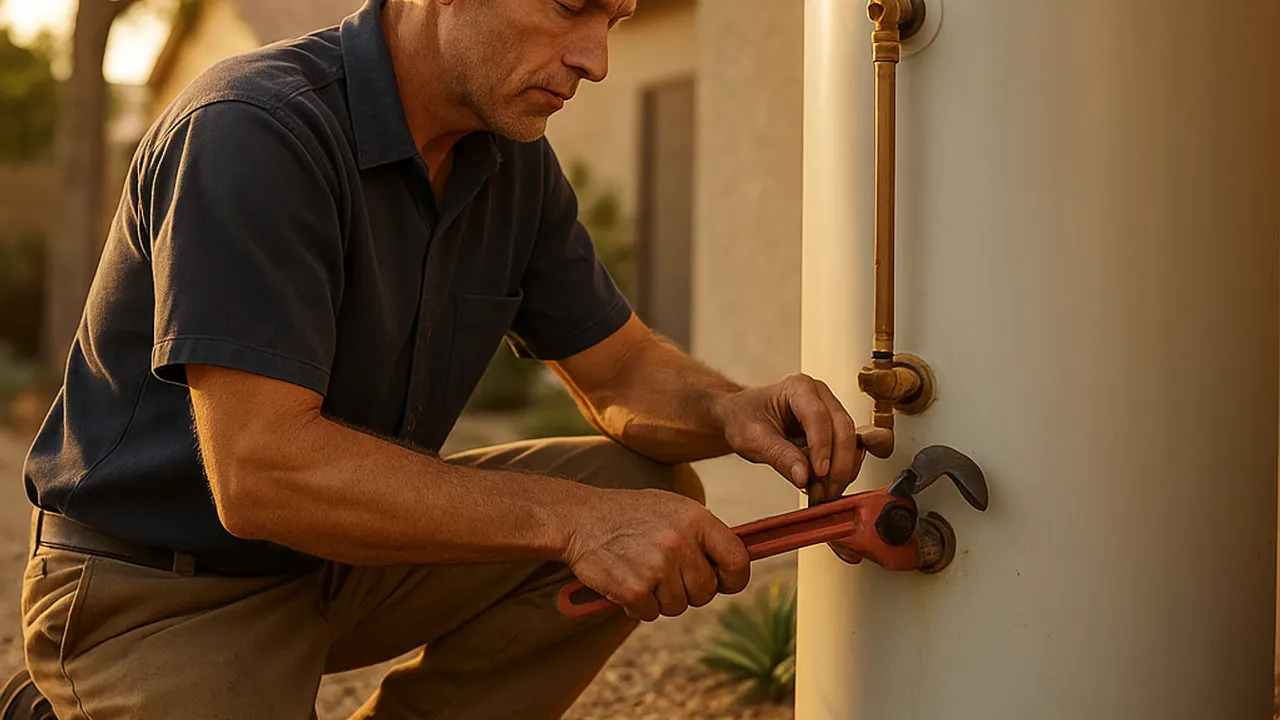
Your water heater is not producing enough hot water because sediment has built up on the tank floor, a heating element or burner has failed, or the dip tube that carries cold water to the bottom of the tank has cracked. In a gas unit, a dirty burner or a thermocouple that's drifted out of range will do the same thing. The fix depends on which of those seven causes is actually happening in your unit.
We're Fountain Valley Plumbing, and we've diagnosed hundreds of these calls across Fountain Valley. This post walks through each cause, how to test for it yourself, and the point where a repair stops being a DIY job.
The Short Answer: Why Your Water Heater Runs Out of Hot Water
Why is your water heater not producing enough hot water? Because the tank is either not heating water fast enough or not storing enough of it. Those are the only two failure modes.
Heating failure means the energy source isn't reaching the water: a burned-out element, a clogged burner orifice, a thermostat set too low, or a pilot that won't stay lit. Storage failure means hot water is leaving the tank faster than it should: a broken dip tube, a failed lower element in an electric unit, or a tank so full of sediment that the usable volume has shrunk from 50 gallons to 30.
Water heater repair in Fountain Valley is the process of isolating which of those two failures is happening, then replacing the specific part. It's rarely the whole tank.
If you need a same-day diagnosis, our team handles Emergency Plumbing Service Fountain Valley CA calls seven days a week.
How Fountain Valley's Water Supply Shortens Water Heater Life
Fountain Valley sits on a blend of imported Colorado River water and local groundwater from the Orange County basin. That blend runs hard - typically 8 to 12 grains per gallon of calcium carbonate - and hardness is the single biggest reason water heaters here fail earlier than the manufacturer's sticker suggests.
Every gallon that enters your tank leaves behind a thin layer of calcium. Over a year, that layer becomes a crust on the bottom of the tank. Over three years, it's thick enough to insulate the burner from the water above it.
Here's what that looks like in practice:
- Year 1-2: Popping and rumbling sounds as steam forms under the sediment layer.
- Year 3-4: Recovery time stretches from 25 minutes to 45 minutes after a long shower.
- Year 5-7: The tank fails at the bottom weld, usually with a puddle you find on a Saturday morning.
Homes in the older tracts - the 1960s and 1970s builds around Emergency Plumber in Talbert - tend to have the original 40-gallon tanks still in place, and those are the ones we see fail most often.
If you're not sure whether your tank is original, look at the data plate on the side. The first four digits of the serial number are the manufacture month and year.
The 7 Most Common Reasons Your Water Heater Isn't Producing Enough Hot Water
These are the seven causes we find on almost every "not enough hot water" call in Fountain Valley. They're listed roughly in order of how often we see them.
1. Sediment Buildup on the Tank Floor
This is the number one cause in Fountain Valley, and it's a direct result of hard water. Sediment insulates the burner from the water, so the tank has to run longer to reach the same temperature. You'll hear a rumbling or popping sound - that's steam trapped under the crust.
The fix is a full tank flush, which we do with a hose and a pump. If the sediment has hardened into rock, the tank is usually past saving.
2. A Failed Heating Element (Electric Units)
Electric water heaters have two elements: an upper and a lower. The upper element heats the top few gallons first so you get hot water fast; the lower element does the bulk of the work. When the lower element burns out, you'll get about 10 gallons of hot water and then nothing.
You can test an element with a multimeter set to ohms. A good element reads between 10 and 16 ohms. A reading of zero or infinity means it's dead.
3. A Broken Dip Tube
The dip tube is a plastic tube inside the cold-water inlet that carries incoming cold water to the bottom of the tank. When it cracks - which happens on tanks made between 1993 and 1996, and on some cheaper units since - cold water shoots straight to the top and mixes with your hot water.
The symptom is unmistakable: hot water that starts strong and then goes lukewarm within 60 seconds. The part costs about $15. The labor is the expensive part.
4. A Thermostat Set Too Low or Out of Calibration
Water heaters should be set to 120°F for most households. If yours is set to 110°F, you'll feel it in the shower. If the thermostat has drifted, the tank might read 120°F on the dial but actually be heating to 105°F.
We check this with an infrared thermometer at the drain valve before we touch anything else.
5. A Clogged Burner or Dirty Thermocouple (Gas Units)
Gas water heaters pull air from the room. In a garage or utility closet, that air carries dust, lint, and - in Fountain Valley - the occasional bit of pollen from the spring bloom. Over time, the burner ports clog and the flame gets lazy and yellow instead of blue.
A dirty thermocouple will also cause the pilot to go out, which means no hot water at all.
6. A Failing Dip Tube or Check Valve on a Recirculation System
If your home has a recirculation pump - common in larger Fountain Valley homes built after 2000 - a failed check valve lets hot water push backward into the cold line. You'll get warm water on the cold side and lukewarm water on the hot side.
7. An Undersized Tank for the Household
A 40-gallon tank serves two people comfortably. Add two kids and a guest, and you're asking it to do more than it can. The average shower uses 2 gallons per minute, so a 10-minute shower pulls 20 gallons. Two back-to-back showers drain a 40-gallon tank completely.
If you're consistently running out with normal use, the tank size is the problem, not the tank itself.
How to Troubleshoot a Water Heater in Fountain Valley CA
You can narrow down the cause in about 15 minutes with no tools beyond a thermometer and your ears. Here's the sequence we use.
- Check the temperature at the tap. Run the hot water for two minutes and measure it. Below 110°F means a heating problem. Above 120°F but still running out fast means a storage problem.
- Listen to the tank. Popping or rumbling means sediment. Silence means something else.
- Time the recovery. After a full draw-down, how long until the water is hot again? Over 40 minutes on a 50-gallon gas tank points to a burner or thermostat issue.
- Look at the flame (gas only). Pull the access panel and look. A blue flame with a sharp inner cone is healthy. Yellow, lazy, or lifting off the burner means it needs cleaning.
- Check the pilot (gas only). If it's out, relight it. If it won't stay lit for more than a minute, the thermocouple is the likely culprit.
If you'd rather not pull panels, our Water Heater Repair Fountain Valley CA team does this diagnosis on-site and tells you what's wrong before we quote anything.
Common Mistakes Homeowners Make When Hot Water Runs Short
The most expensive mistake is replacing the tank when a $40 part would have fixed it. We see this constantly - a homeowner decides the water heater is "old" and buys a new one, when the actual problem was a burned-out lower element or a broken dip tube.
Other mistakes we run into:
- Turning the thermostat to 160°F to compensate. This scalds children and voids the warranty. It also accelerates sediment baking onto the tank floor.
- Flushing the tank without shutting off the power. On an electric unit, that burns out the upper element in seconds.
- Ignoring the anode rod. The anode rod sacrifices itself to protect the tank from rust. Once it's gone - usually at year four or five in Fountain Valley's water - the tank starts corroding from the inside.
- Using a snake on a gas line. Never. If you smell gas, leave the house and call us.
- Assuming a tankless unit can't have the same problem. Tankless heaters scale up too, and descaling is a yearly job here.
If you're dealing with a leak alongside the hot water issue, our Leak Detection & Repair Fountain Valley CA team can handle both in one visit.
When to Call a Professional
Call a professional when you see water pooling under the tank, smell gas, or when the tank is more than eight years old and the repair quote is more than a third of a new unit's price.
Those are the three lines. Below them, a DIY flush or a thermostat adjustment is fine. Above them, you're risking a flood in your garage or a gas leak in your utility closet.
We handle water heater repair in Fountain Valley, California for both tank and tankless units, and we carry the common parts - elements, thermocouples, dip tubes, anode rods - on the truck. That means most repairs are done in one visit, usually in under two hours.
If your water heater is in a tight closet or an attic, tell us when you call. Those take longer and we'd rather send the right technician the first time.
What Water Heater Repair Costs in Fountain Valley in 2026
Typical 2026 pricing in this area runs $150 to $350 for a heating element replacement, $180 to $400 for a thermocouple or burner cleaning, and $250 to $500 for a dip tube replacement. A full tank flush is $125 to $225.
Those ranges assume a standard 40- or 50-gallon tank in an accessible location. A tank in an attic or a tight closet adds $75 to $150 in labor.
For comparison, a new 50-gallon gas water heater installed in Fountain Valley runs $1,400 to $2,200 in 2026, depending on venting and code requirements. That's the number to weigh a repair against.
We quote the repair before we start. If the diagnosis shows the tank is past saving, we'll tell you that instead of selling you a part that won't fix it.
Frequently Asked Questions
Why is my water heater not producing enough hot water in Fountain Valley?
The most common cause here is sediment from hard water - Fountain Valley's supply runs 8 to 12 grains per gallon, which coats the tank floor within two to three years. Sediment insulates the burner, so recovery time stretches and the tank runs out faster. A failed lower element or a cracked dip tube are the next two most likely causes.
How do I fix a water heater that is not producing hot water in Fountain Valley CA?
Start by measuring the hot water temperature at the tap. Below 110°F points to a heating failure; normal temperature but fast depletion points to a storage failure. From there, check the thermostat setting, listen for popping (sediment), and test the lower element with a multimeter. Most fixes take under two hours for a licensed plumber.
Who do I call for water heater repair in Fountain Valley?
Call a licensed plumbing contractor that carries common water heater parts on the truck - elements, thermocouples, dip tubes, and anode rods. Fountain Valley Plumbing handles same-day water heater repair across Fountain Valley and the surrounding neighborhoods, including Mile Square, Talbert, and Ward.
Can a water heater be repaired if it is not producing enough hot water in Fountain Valley?
Yes, in most cases. A burned-out element, a broken dip tube, a dirty burner, or a thermostat that's drifted can all be repaired for $150 to $500. The exception is a tank that's leaking from the shell or the bottom weld - that one can't be repaired and needs replacement.
How much does water heater repair cost in Fountain Valley CA?
In 2026, expect $150 to $350 for an element replacement, $180 to $400 for a thermocouple or burner service, and $250 to $500 for a dip tube. A full tank flush runs $125 to $225. Attic or tight-closet installations add $75 to $150 in labor.
Get Help with Emergency Plumber in Fountain Valley
If your water heater is leaking, dead, or running out of hot water faster than it should, we can be at your door today. We serve all of Fountain Valley, from Emergency Plumber in Mile Square to the neighborhoods off Brookhurst and Warner.
Call (858) 392-8090 and we'll diagnose the problem, quote the repair, and get your hot water back the same day.