What Should You Do First When a Water Pipe Bursts
Shut off the main water valve first, then drain the lines and call an emergency plumber. Here is exactly how to handle a burst pipe in Fountain Valley before damage spreads.
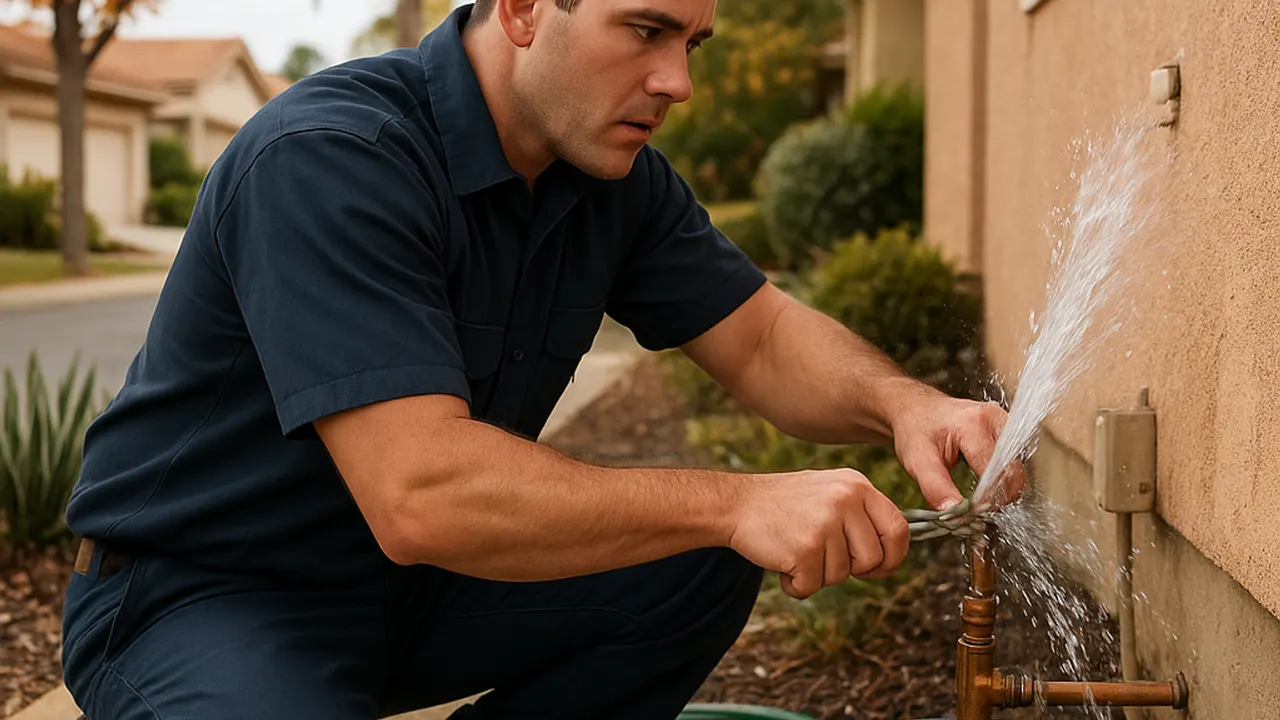
Shut off your main water valve first, then open a faucet to drain the lines and call an emergency plumber. That single move - killing the water supply - stops the flooding and is the difference between a $400 repair and a $12,000 insurance claim. What should you do first when a water pipe bursts is not a trick question; it is a sequence, and the order matters. In Fountain Valley, where much of the housing stock dates to the 1960s and 1970s, we run this exact playbook several times a week. Here is the full sequence, start to finish, plus what it costs and the mistakes that turn a bad afternoon into a ruined floor.
Shut Off the Main Water Valve Immediately
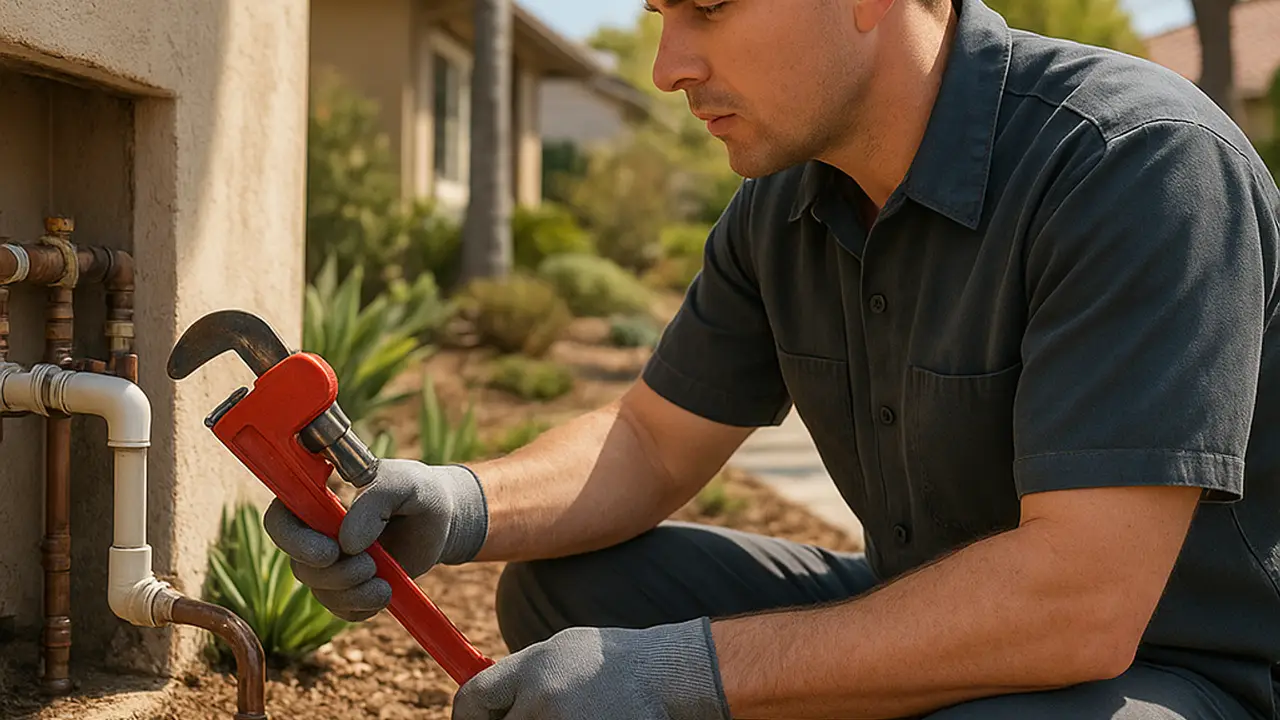
Shutting off the main water valve is the first step for a burst pipe in Fountain Valley because every second the line stays pressurized, more water pushes through the break. Find your main shutoff before you need it. In most Fountain Valley single-family homes it sits at the front of the property near the sidewalk, inside a concrete or plastic box marked "water." In condos and apartments, look under the kitchen sink, in a utility closet, or in the garage against the wall shared with the neighbor.
Turn the valve clockwise until it stops. If it is a gate valve (round handle), it may take 5 to 7 full turns. If it is a ball valve (lever handle), a quarter turn does it. Old valves seize - if yours will not budge, do not force it with a pipe wrench and risk snapping the stem. Call us and we will talk you through the next best option, which is usually the meter valve at the curb.
Once the water is off, open the lowest faucet in the house - a hose bib outside or a tub on the ground floor. That drains the remaining water in the pipes and relieves pressure on the break. You will hear the flow slow to a trickle within a minute or two.
Drain the Lines and Kill the Power if Needed
Water and electricity are the two things you never want meeting in a wall cavity. If the burst pipe is anywhere near outlets, a breaker panel, a water heater, or under a kitchen or bathroom floor, go to your electrical panel and shut off the breakers for the affected rooms. Do not stand in standing water to do it. If the panel itself is wet or you cannot reach it safely, leave it alone and call 911 or the utility.
After the water is off and the power is handled, open every faucet in the house - hot and cold. This drains the system faster and prevents a vacuum from holding water in the lines. Flush toilets once to empty the tanks. If you have a tankless water heater, shut off the gas or power to it as well; running a tankless unit dry can damage the heat exchanger.
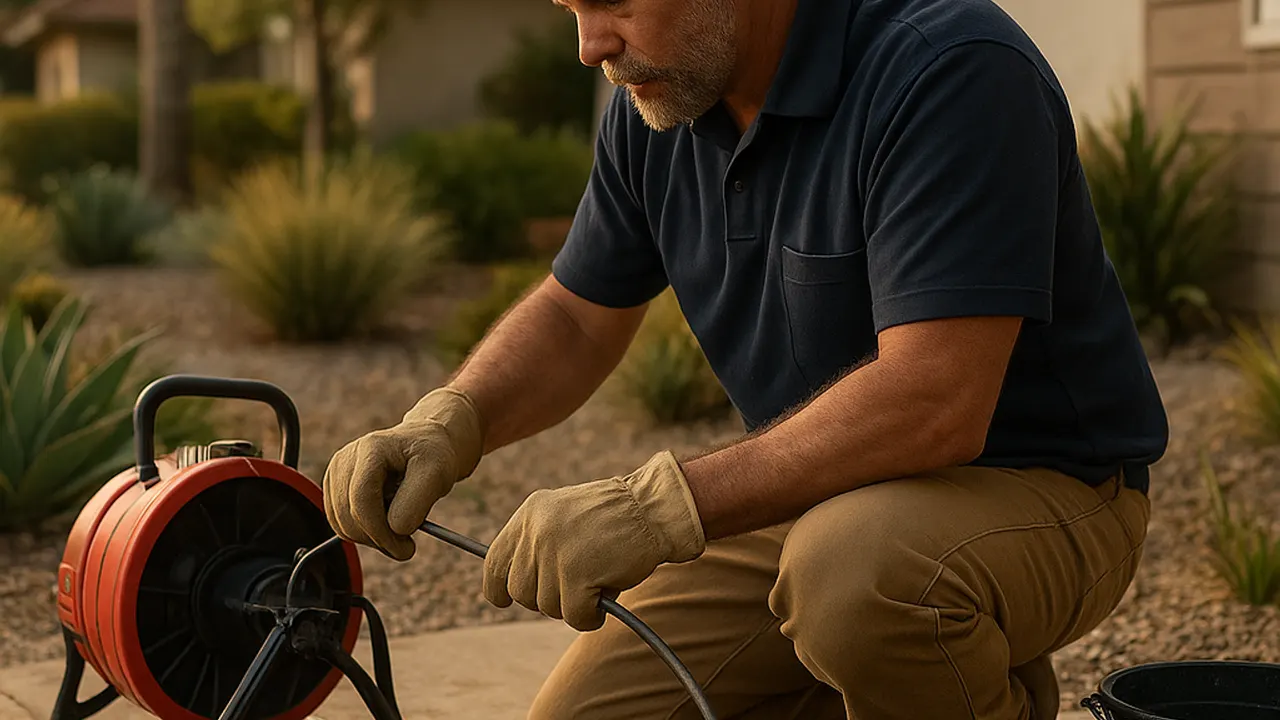
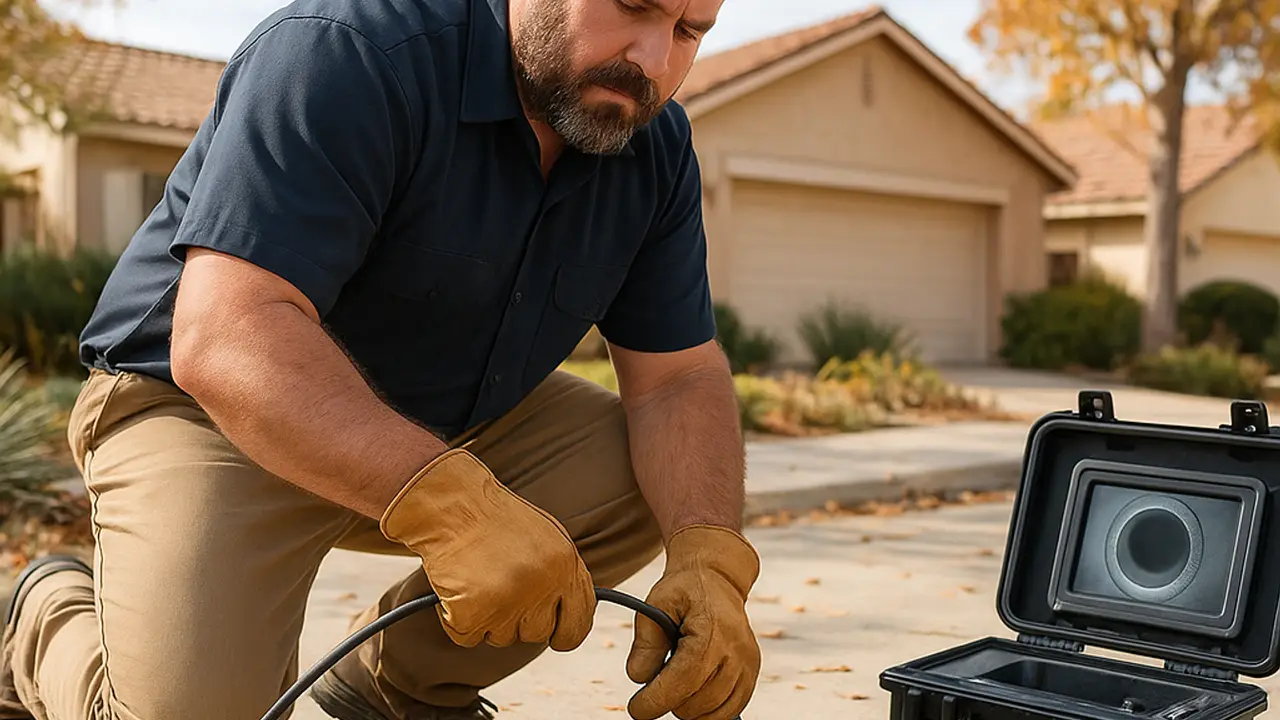
For a burst pipe in a slab or under a concrete floor - common in Fountain Valley's mid-century ranch homes - you will not be able to see the break. You will hear it: a hiss or rush under the floor, or water seeping up through the baseboards. In that case, shut the main, drain what you can, and get a leak detection specialist out. We use acoustic listening equipment and thermal imaging to pinpoint slab leaks without tearing up the whole floor.
Contain the Water and Document the Damage
Containment is about limiting the square footage the water touches. Grab every towel, bath mat, and old blanket you own and build a dam at the edge of the wet area. If the water is spreading toward a carpeted room, pull the carpet back at the tack strip so it does not wick into the pad. Move furniture, electronics, and anything cardboard off the floor.
Then document everything. Take photos and a short video of the standing water, the damaged drywall, the warped baseboards, and any ruined belongings. Your insurance adjuster will want them, and the more you have, the smoother the claim goes. Note the time you shut the water off - that timestamp matters when you file.
If the water is more than an inch deep or has been sitting for more than an hour, call a water damage restoration company the same day. Mold can start growing on wet drywall in 24 to 48 hours in Southern California's warm indoor temperatures. A shop vac and a box fan are not enough for a soaked subfloor.
Call an Emergency Plumber in Fountain Valley
Calling an emergency plumber in Fountain Valley is step four, not step one, because no plumber can stop the water faster than you can by turning a valve. Once the water is off, though, the clock restarts. A burst pipe repair in Fountain Valley is not a DIY job - the break is usually inside a wall, under a slab, or behind a cabinet, and it needs to be cut out and replaced with the right material for your home's plumbing.
We answer the phone 24 hours a day, including holidays. When you call, tell us three things: where the water is coming from, whether you got the main shut off, and what kind of pipe you have (copper, galvanized, PEX, or CPVC). That last detail tells us what parts to load on the truck before we leave the shop.
Our team arrives with leak detection gear, pipe repair clamps, replacement pipe sections, and a moisture meter. We find the break, fix it, and test the line before we leave. If the repair is in a slab, we can often reroute the line through the attic or walls instead of jackhammering the floor - faster, cheaper, and less disruptive for your family.
What Causes Burst Pipes in Fountain Valley Homes
Fountain Valley's plumbing problems are a product of its geography and its building age. The city sits on a coastal plain with soil that shifts slightly with the seasons, and much of the housing was built between 1960 and 1980. That means three failure modes show up again and again.
Galvanized Steel Corrosion
Galvanized steel pipes were standard in Fountain Valley homes built before 1975. They rust from the inside out. By the time you see a pinhole leak or a brown tint in your water, the pipe wall is paper-thin. When one section bursts, the rest of the line is usually not far behind. We often recommend replacing the whole run rather than patching one spot.
Slab Leaks and Soil Movement
Homes on post-tension slabs - common in the neighborhoods around Mile Square and along the Talbert corridor - run their water lines under the concrete. When the soil expands and contracts, it stresses those pipes. A slab leak can run for weeks before you notice a hot spot on the floor or a jump in your water bill.
Water Pressure and Thermal Shock
Fountain Valley's municipal water pressure runs 60 to 80 psi in most neighborhoods. That is within code, but it is hard on older pipes. Add the thermal shock of a cold winter morning - water in the 50s hitting a pipe that was sitting in a warm wall - and a weakened section can split. The same thing happens in summer when the outdoor line heats up and then gets a rush of cold water from the main.
What to Watch Out For: Common Mistakes
The mistakes we see most often are the ones that turn a manageable repair into a disaster. Here are the big ones.
- Waiting to shut off the water. Every minute the main stays open, another 5 to 10 gallons can pour into your walls. Shut it off before you call anyone.
- Using the wrong valve. The valve on your irrigation line is not the main. If you shut off the wrong one, the water keeps flowing. Test your main shutoff once a year so you know it works.
- Putting a bucket under the leak and calling it done. A bucket catches water; it does not stop the damage inside the wall. Drywall and insulation stay wet and grow mold.
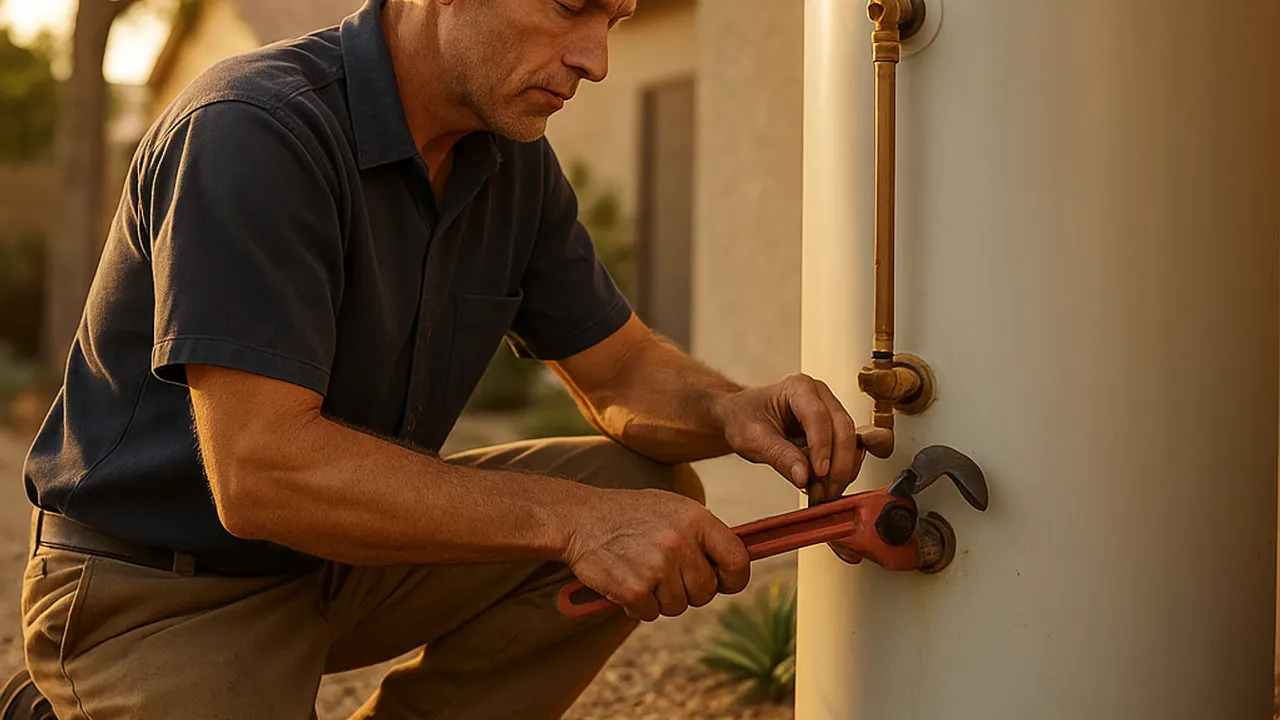
- Running the water heater. If the main is off and the water heater is still firing, it can overheat and crack the tank. Shut off the gas or power to it.
- Ignoring the water bill. A sudden spike in your Fountain Valley water bill with no change in habits usually means a hidden leak. Do not wait for it to burst.
How Much Does Burst Pipe Repair Cost in Fountain Valley?
Typical 2026 pricing for burst pipe repair in Fountain Valley runs $350 to $1,200 for an accessible pipe in a wall or crawlspace, and $1,500 to $4,500 for a slab leak that requires rerouting or concrete work. Emergency after-hours calls add $150 to $300 to the ticket. Those numbers assume the pipe is reachable and the damage is contained to one area.
What drives the price up: the location of the break (slab and second-story walls cost more), the pipe material (copper and PEX are straightforward; old galvanized lines often need a larger replacement), and whether water damage restoration is needed. A burst pipe that soaks a hallway and two bedrooms can add $2,000 to $8,000 in drying, drywall, and flooring - which is why shutting the water off fast matters so much.
We quote the repair before we start. If we find a second problem while we are in the wall - a corroded fitting, a failing shutoff valve, a cracked drain line - we show you and price it separately. No surprise line items.
When to Call a Professional
Call a professional the moment you cannot see or reach the break. If the water is coming from inside a wall, under a slab, or behind a cabinet you cannot move, you need leak detection equipment and a plumber who knows how to open the wall without destroying the room. The same goes for any burst pipe on a second floor - water travels down and sideways, and the damage is always worse than it looks from above.
We handle burst pipe repair in Fountain Valley, California every day. Our technicians are state-licensed plumbing contractors, and we carry the parts to fix copper, PEX, CPVC, and galvanized lines on the same visit. If the repair is beyond a simple cut-and-replace - a slab leak, a main line break, or a sewer line that has shifted - we have the equipment to handle it without sending you to a second contractor.
If you are not sure whether you have a burst pipe or just a bad valve, call us anyway. We will ask a few questions over the phone and tell you whether it can wait until morning or needs a truck right now.
Frequently Asked Questions
What should I do first when a water pipe bursts in Fountain Valley?
Shut off your main water valve immediately, then open the lowest faucet in the house to drain the lines. That stops the flooding in under a minute. After that, kill power to wet areas, contain the water, and call an emergency plumber. Do not wait to call your insurance company before shutting the water off.
Who do I call for a burst pipe in Fountain Valley CA?
Call a licensed emergency plumber who serves Fountain Valley and can be on-site within the hour. We answer 24/7 and carry repair parts for copper, PEX, and galvanized lines. If the burst is in a slab or main line, ask whether the plumber handles slab leaks and reroutes in-house.
How do I shut off the water if a pipe bursts in Fountain Valley?
Find the main shutoff at the front of your property near the sidewalk, inside a marked box. Turn the handle clockwise until it stops - 5 to 7 turns for a gate valve, a quarter turn for a ball valve. If it will not turn, use the meter valve at the curb or call us for help.
How much does burst pipe repair cost in Fountain Valley?
In 2026, expect $350 to $1,200 for an accessible pipe repair and $1,500 to $4,500 for a slab leak. After-hours emergency calls add $150 to $300. Water damage restoration, if needed, runs $2,000 to $8,000 on top. We quote the repair before we start work.
Can a burst pipe cause water damage in Fountain Valley CA?
Yes. A burst pipe can release 5 to 10 gallons per minute, which soaks drywall, insulation, and flooring in under an hour. Mold can begin growing within 24 to 48 hours in Southern California's indoor temperatures. Shutting the water off fast is the single biggest factor in limiting the damage.
Get Help with Emergency Plumber in Fountain Valley
If your pipe has already burst, shut the main, drain the lines, and call us. We will be there with the tools and parts to stop the leak and get your water back on. One call, one visit, and we do not leave until the line holds pressure.
Call Fountain Valley Plumbing at (858) 392-8090 - 24 hours a day, 7 days a week.